Sunday, 10 June 2018

Trump’s Syria U-turn: Is History Repeating Itself?


Charlie Avery | 20/05/2018


“I want to get out”, stated President Trump in a White House press conference in early April, “I want to bring our troops back home”. He was referring to his decision to withdraw American ground forces from Syria as the “task” of defeating Islamic State draws towards an apparent conclusion. Mr Trump, who generally opposes US military intervention as part of his ‘America First’ approach to foreign policy, indicated to aides that he wanted all two thousand US troops currently stationed in Syria to return home within six months.

However, just under two weeks later, the President had authorised a fresh round of missile strikes against Syrian government forces. This came days after President Bashar al-Assad, a close ally of Moscow, unleashed a suspected chemical attack against civilians in the rebel-held town of Douma, located just outside Damascus. 
            Such a sudden, and dramatic change in Trump’s position on Syria mirrors the events of almost exactly a year before, when he ordered strikes against the Shayrat airbase, following a sarin gas poisoning. In both cases, his statements were highly emotive, invoking images of innocence and family, justifying bombing raids on the grounds that such atrocities cannot be allowed to go unanswered. This time, though, it has triggered a stronger commitment from Washington to “sustain” military pressure against the Syrian regime.

Yet evidence of mass executions, torture and attacks against civilian targets is already widespread. According to humanitarian organisations from Amnesty International to the UN’s Human Rights Council, who have documented the seven-year conflict since it began, Syrian government forces have committed war crimes since as early as 2012.

The U-turn of early April was simply the latest development in an ever-unfolding history of American policy in Syria, a history characterised by inconsistency. This trend spans, not merely the seven years during which the complex and bloody conflict has ravaged the country, but seven decades of American interest in the Middle Eastern nation.

Democracy
Having taken a “special interest” in the nascent Syrian state after the Second World War, the US played an active role in training the newly formed national army. However, as regional tensions escalated in response to emergent conflicts in Palestine, all military support was withdrawn, for fears of American expertise and weaponry being used against Israel, their favoured new ally.

After supporting democracy in Syria since its independence in 1946, the Truman administration helped orchestrate a coup d’état three years later, replacing the democratically elected al-Quwatli with army commander Husni al-Za’im. al-Za’im, part of the Alawi minority, offered to further Washington’s strategic regional interests, namely acquiescing to peace talks with Israel and banning Communism. Most notably, however, he agreed to the installation of the trans-Arabia pipeline on Syrian territory, something his fiercely nationalistic predecessor would never have sanctioned.

Some historians have traced the origins of today’s civil war back to the 1949 coup, pointing to the resultant dominance of Alawite military leaders within Syria’s turbulent political affairs. Director of the Center for Middle East Studies at the University of Oklahoma, Joshua Landis, writes: “The reason there is a civil war today is because much of the Sunni majority rose up in protest and wanted to get rid of this Alawite military dictatorship”

Islamic fundamentalism
In recent history, American Middle Eastern policy has been characterised by its staunch opposition to Islamic extremism, notably using Syria as a location for some of its infamous ‘Black Sites’ during the War On Terror. In coordination with the Assad regime, suspected terrorists were beaten, tortured and indefinitely detained for information which was allegedly passed to US officials on the hunt for Muslim extremists.

Although its stance upon radical Islam is now steadfast, documents uncovered from an elite CIA-MI6 working group in 1957 reveal that the former intended to “augment tension” in Syria through the militarisation of “political factions”. The strategy was later employed with the Mujahideen in Afghanistan under the Reagan administration. In this instance, “factions” referred to the Islamist Muslim Brotherhood which, at the time, remained a largely peaceful organisation. US intelligence officials had hoped to use the context of violent unrest to justify a foreign intervention from pro-Western Jordan or Iraq, so as to destabilise the anti-Western Ba’athist-Communist government. 
            Despite the fact that the plans were subsequently cancelled, the documents shed light upon the America’s conflicted record regarding Syrian self-determination and its historical stance towards radical Islamic groups.

Timber Sycamore
Jumping forward to 2012, in spite of Obama’s initially firm stance against further covert intervention in the escalating civil war, the US changed its course of action once again. He sanctioned a CIA program (codenamed Timber Sycamore) which trained and supplied arms to rebel groups, aiming to blunt the advances of the Syrian regime.

Although it brought fleeting periods of success, the $1-billion-dollar plan has proven vastly ineffective, particularly since the relentless, overt Russian bombing campaign began in 2015. Critics point to the fact that Timber Sycamore has flooded the Middle Eastern black market with weapons, allowing guns to fall into the hands of al-Qaeda affiliates like the Nusra Front who often fight alongside rebel forces. The program was cancelled by Trump last year.

Charles Lister, a Syria expert at the Middle East Institute, concluded that the Obama administration “never gave it the necessary resources or space to determine the dynamics of the battlefield. They were drip-feeding opposition groups just enough to survive but never enough to become dominant actors.”

Few commentators can predict what the Trump administration’s next move will be: “his preferences are still unpredictable in the extreme”. Examining Syria’s relations with the United States over the years only serves to confirm such uncertainty. As George Bernard Shaw rather poignantly summarised, “We learn from history that we learn nothing from history.".

America’s erratic policy record towards this Middle Eastern state transcends presidents and their respective ideologies. Mr Trump may have actually named his approach to international relations “America first” but, regarding Syria, administrations past and present have demonstrated that this has always been the case. While its current conflict is undeniably complex, the constantly shifting stance of the US and its Western allies makes Syria’s future all the more unclear.

Friday, 23 February 2018

Shedding Light on a Black Mirror


Whoever at Netflix made the decision to start taking over and producing shows of its own deserves the chunkiest of bonuses. The past ten years has seen the company transform from a US-based mail-delivery DVD rental service to the world's second largest online streaming website. It is now among the 30 most popular sites in the world! Gone are the days of trailing around its endless digital corridors, desperately searching for an original TV series that isn't Breaking Bad or an ageing British sitcom. I am in no way implying that Fawlty Towers or The Thick of It aren't little pieces of comedy gold but you could hardly call them ground-breaking content.
           Recently, we've witnessed an explosion in the number of new series and films featured on and produced by Netflix. You can now watch originals covering a vast range of stories, places and characters, from the adventures of Marco Polo in the court of Kublai Khan to Snoop Dogg coaching a children's American football team. As well as creating new shows, the company has absorbed existing ones like Arrested Development and Trailer Park Boys. Of these, Channel 4's Black Mirror, a masterstroke of gritty British drama fused with mind-boggling science fiction, is by far their greatest acquisition yet...


Rather than developing any overarching storyline, the show is in fact an anthology of short films all loosely based around the concept of technological 'progress'. Each episode features a plausible prospective technological development and a set of unwitting characters who inevitably let it ruin their lives. Whether it's a microchip which allows you to replay any moment in your life or an army of metal bees to pollinate the country, Black Mirror offers an Argos catalogue of handy gadgets to assist the citizen of tomorrow in daily life. What could possibly go wrong? I'll let you find out for yourselves…

Judging it as a TV series alone, Black Mirror is masterfully written and acted. Channelled directly from the exquisitely cynical brain of Charlie Brooker, the plot of each episode combines the flashy technologies with the very real facts of life they initially appear to help with. Situations regularly encountered as we slither along this mortal coil, among them parenthood, love and of course death, are distorted by his dystopian lens. So, despite the complexity, and indeed farfetched nature of the concepts addressed in the programme, every story feels real and relatable.

GOT's Bronn looking a lot better dressed than usual
Brooker’s screenplays tend to be unsettling in tone and bleak in resolution but they are insatiably engaging; plotlines take various twists and turns leaving you startled, confused but ultimately hooked. His stories are brought to life by a raft of very talented, yet rarely star-studded casts, fuelling exasperated conversations of the ‘what else have they been in?’ variety. Perhaps the most outstanding solo performances come from Alex Lawther, Maxine Peake and Lenora Crichlow, all of whom find themselves alone in bone-chilling situations involving guilt, blackmail and the occasional robotic killer-canine. Do they deserve it? Again it’s up to you to decide...

To the large contingent of sci-fi sceptics, often put off by storylines too far detached from reality, don't be deterred by a few futuristic gizmos! The purpose of the series is not to show off any CGI masterpiece or thinly padded intergalactic love story; it uses extreme scenarios to reflect the twisted reality of everyday life... of us. Simultaneously, it manages to explore the darkest, innermost complexities of the human mind while addressing the most overarching social and political issues of today.
TVs for walls: not bad for a prison cell eh?...
Episodes like Men Against Fire, The Waldo Moment and White Bear are more traditionally ‘political’, pointing fingers at the authorities who use powerful discourses to mislead their own people whilst homogenising and vilifying society's outsiders. The strongest episodes however, are those which delve into social commentary. Season one’s Fifteen Million Merits, for example, uses the metaphor of a slave-like existence (on exercise bikes that generate power) to represent the grind of daily life and, in turn, critique the fame-obsession and escapism which fuels our ‘talent’ show, celebrity culture. Hated in The Nation, meanwhile, critiques social media as a platform for detached, unchallenged hate in a society where death threats have become commonplace for those under the cruel public spotlight. However far from reality the scenarios appear to be, they were all inspired by, and consequently reflect, the world around us, albeit through Brooker's fatalistic lens.

Black Mirror makes it as easy as possible to put yourself in the shoes of characters grappling with huge moral dilemmas, emphasising the profundity of the questions the show seeks to raise. Will technological advances bring about an end to inequalities, or simply perpetuate them? Are computers our ultimate ally or a potentially deadly adversary? Is the power granted by technology used by corrupt elites to control and manipulate us or are we all, as a species, inherently corrupted? I think you know where to go to find out...

Friday, 13 October 2017

REVIEW | CunninLynguists - Rose Azura Njano


When you're a rap collective called CunninLynguists, you're gonna have to produce some pretty outstanding music in order to be taken seriously. Incidentally, the Southern American trio had never initially even aspired towards the latter, their name casually dreamt up in the early stages of formation. Seventeen years on and the group have risen from Atlantan obscurity to become one of the most acclaimed acts in The South's underground hip-hop scene. That being said, for a rap collective which has garnered such critical acclaim over the years, the release of their first proper studio album in over six years has passed pretty much under the radar.

Rose Azura Njano, CunninLynguists' ambiguously named sixth record, produced entirely by founding member Kno, is no great departure from the style which characterises their accomplished
discography. If I were to sum up my overall impression in a word it would be funky. The production is masterfully layered, making use of a variety of instruments which transcend both era and genre. Jangling 80s guitars sit comfortably alongside thunderous grand pianos and the snapping snares more familiar to fans of 2000s rap. Elements like the electric guitar solo at the end of Red Bird and the high-pitched synth tracks on Red White And Blues are shining examples of Kno's adventurous approach to the record's production, setting it apart from anything else I've heard all year.

While the album sports an eclectic range of sounds, lyrically it seems more focused, covering both social and political issues. Perhaps the most dominant theme is America's (and perhaps the world's) racial inequality covered in songs like Riot! and Violet (The Upper Room).

"Being hood ain't the absence of good
Being square don't make you equal or fair, it's not an equal affair"

Natti and Deacon The Villain, who take on the majority of the album's lyrical (as well as vocal) duties, seem wistful, even melancholy at times as they consider the state of humanity. More specifically, they dwell on the injustices which grip American (and indeed Western) society, chiefly racial inequality but also issues like gentrification (Gone) and the modern obsession with celebrity (Any Way The Wind Blows). At times sad, at others angry, Kno sets the tone and tempo of each beat according to the lyrical content of the verses. In a genre where expressing feelings makes you a 'pussy bitch', this is a step forward if nothing else.


Each track is delivered with that Southern Fried flow, reminiscent of André 3000 and Killer Mike,
with bars ending on a single emphasised word. It's a unique style, well-suited to Kno's beats but becomes a little formulaic. As is the case with so many hip-hop records, the first half is excellent but the second half drags a little and could have been spiced up with some guest features. The soft Southern tones, while certainly not devoid of passion, are at times missing a bit of excitement.
          Nevertheless, Rose Azura Njano is a chilled, meaningful and, above all unique album which deserves lots of credit.   
7/10


Tuesday, 26 September 2017

Everything Everything - A Fever Dream

After a major resurgence over the past half decade, the British indie scene (to conflate a vast array of genres) has gone relatively quiet once again. With bands like The Wombats and Catfish And The Bottlemen, both of whom saw their wider popularity soar in recent years, currently writing new albums, a void (albeit a fairly small one) has been left. By far and away the most original band paddling in that tide of indieness at the time was Everything Everything. Their 2015 record Get To Heaven broke them into the top ten of the UK Albums Chart and received outstanding levels of critical acclaim. Naturally then, a followup has been eagerly anticipated by fans and critics alike...


The album starts strongly, opening with the forlorn tones of Night Of The Long Knives. The track continues Jonathan Higgs' lyrical tendency towards social and political commentary, named after Hitler's infamous purge against political opponents. It immediately conjures up comparisons between the Nazism of the 1930s and 40s and the ominously growing presence of fascist rhetoric in today's political discourse. This is followed by the insatiably catchy and more upbeat leading single Can't Do, which focuses on the pressures of finding lyrical inspiration, and then third single Desire, a critique of our increasingly selfish and reckless society, personified perhaps by Trump. The cascading synthesizers and twangy basslines in these three tracks represent the perfect sonic transition into the new album.

From that point the record embarks on a significantly edgier course even by the four piece's wild standards. Theses could be written on every song, there is so much to unpack. Whilst Big Game is a more directly overt attack on the tangerine leader of the free world, later songs tackle more philosophical and political issues including xenophobia and the legitimacy of power. Their lyrics remain clear enough throughout that a general message can be understood in most songs but crucially remain abstract enough that listeners can make their own particular interpretations as to the metaphors and wordplay used throughout.
   
The record, particularly in its latter half, feels significantly slower than Get To Heaven. This has been chosen deliberately, perhaps to mirror the darker, more sombre tone created by its lyrical content. Additionally, it's clear to see the group becoming more adventurous with production, adding intricate layers of sound to every song. In places they've certainly overdone it and the tracks grow discordant and grating, however these are certainly in the minority. Love, so often an overarching theme for most artists, only crops up in the final song (White Whale), which captures the delicately melancholic sound of the final five.


Everything Everything are a band who relish in defying musical convention and they have done so once again with A Fever Dream, crafting a truly original and intelligent album. While it may not possess the more catchy commercial charms of Get To Heaven, its astute lyricism and careful construction ensure that it still remains a great album, cementing their position at the helm of British indie music.
                        8/10

Thursday, 6 July 2017

Mini Review: Cold War Kids - LA DIVINE


Entering their thirteenth year (eleven since their debut L.P.), Long Beach's Cold War Kids can now be considered veterans of the US indie scene. However, the stop-start guitar, thumping bass drums and smooth keyboard which have come to characterise their sound remains constant. As do Nathan Willett's soaring vocals and pitch-perfect falsettos with their soulful, almost gospel rock quality reminiscent of  Foals' Yannis Philippakis or even new Brandon Flowers.
        In spite of their experience on the road, every song is infused with a youthful optimism and drive to find love. Willett approaches the latter with supernatural intensity in opening track Love Is Mystical. Don't mistake this for the groan-inducing lovey-dovey lyricism that many similar bands often find themselves producing. The Californian quintet demonstrate a certain maturity reflecting on relationships past and present, successes and failures. Nor are they simplistic: every song is layered with intricate bass and echoey percussion. While the album undeniably starts more strongly than it ends, it's definitely worth a listen nonetheless. 4/5

Friday, 30 June 2017

DOWNLOAD FRANCE: REVIEW


While I have certainly dabbled in the genre, I could hardly label myself a true 'metaler'. My skin may well be sufficiently pasty but I lack the flowing long hair of your stereotypical heavy metal fan and my beard bears closer resemblance to Henry VIII than Lemmy Kilmister. Musically, I have always been drawn to a neater, cleaner sound with tight harmonies and delicate instrumentals. As a result, my mind has been closed to vast swathes of metal music and thus I have tended to give certain festivals a wide berth. Download UK is a prime example of such and (despite the inclusion of my beloved A Day To Remember) it was once again dismissed this year. And then I saw this poster...

Honourable mention for Alter Bridge who were fantastic
When Blink 182 AND Prophets Of Rage are both playing second fiddle at a festival, it's almost an obligation to at least investigate ticket prices... and when you discover that it will only set you back 160 euros (including free camping), there really is no turning back.

Yes it did certainly have a bit of that quintessential French dodginess to it -food and shade provision was laughably shoddy- but that only added to the charm of the whole experience. Weather-wise, to use the standard British meteorological assessment, it was 'well ot', leading to the rather surreal experience of hearing the darkest, most piercing metal screams beneath soft blue sky and radiant sunshine. With so many artists headbanging their way through the weekend, it's tough to be selective but select we must.

Blink-182
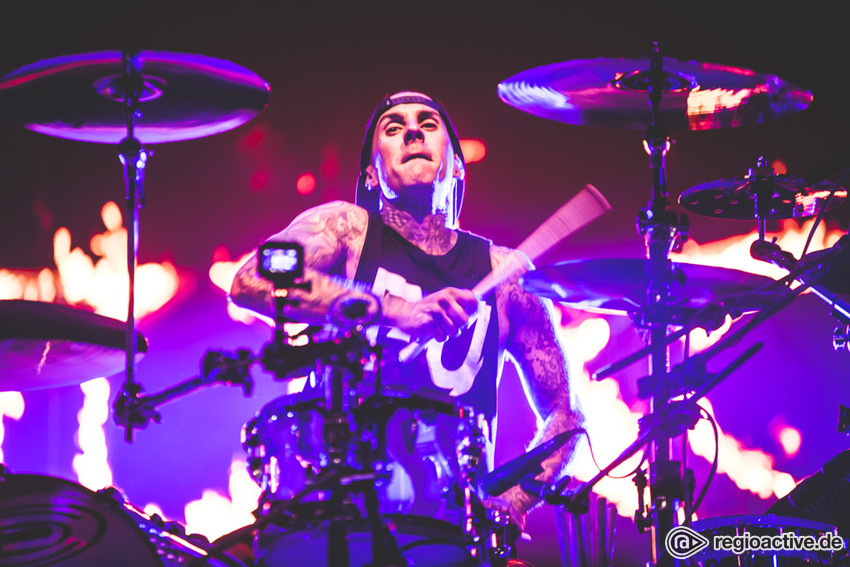
Providing a summery soundtrack to the Friday sunset, the veterans of pop-punk lit up the main stage in the only way they know how: sing-along anthems, dick jokes and physics-defying Travis Barker drum solos. The short length of their songs allowed them to squeeze in the lion's share of their most iconic hits, interspersed with some lesser known B-side gems like Violence and Anthem Part 2 for those of us enthralled enough to know them. Rather than detracting from the set, the carefully selected new material complemented it excellently, the heaviest and fastest tracks (Los Angeles, Bored To Death and Cynical) chosen to satisfy the crowd of expectant metalheads. Matt Skiba brings the freshness, energy and, let's not sugar coat it, decent vocals which were unfortunately absent from Delonge's performance when I saw them three years ago. On the whole, everything was clean and refined, a superb way to kick off the festival.


Linkin Park
Although their discography can be just as prone to misses as it is to hits, Linkin Park have always shouldered a reputation for magnificent live performances. Their Download gig only served to reinforce such a reputation. The instrumentals were, as expected, on point, with added flair and extended solos (like on What I've Done) throughout, provided by Brad Delson: the calmest, most serene guitarist of all time. In amongst the chaos, the ear muffed figure amusingly perches on the amp, eyes closed, gently nodding his head to the fury of One Step Closer, Papercut and Faint etcPredominantly however, the performance was carried by the supreme vocal combination of Mike Shinoda, always anchored to either keyboard or guitar and Chester Beddington who's left free to rampage around the stage. The former's effortless hip-hop flows and harmonies work in tandem with the latter's soaring vocals and rip-roaring screams. Both sound the same, if not better than the studio recordings.


Demonstrating a classy, intimate side previously unknown to me, the nu-metal pioneers even broke up their set with a stripped back acoustic rendition of Crawling, Chester displaying a delicate (a word rarely associated with Linkin Park) power to his voice. Tragically, however, they were let down by the new pop/dance tracks from their 2017 release One More Light. To these, the crowd reacted in a dull, subdued manner as a light chorus of boos rippled across the arena. It was performed faultlessly but when you follow Numb with what sounds like the musical lovechild of Owl City and a David Guetta tribute act to 90,000 hardcore metalers, I'm not sure what else they could have expected.

System Of A Down
Easily the most highly anticipated act of the festival, Armenia's greatest export stomped, roared and, at times, even caressed their way through a Mezmerizing (a little one for the SOAD fans), 30-song performance. I use the word 'performance' because 'set' simply doesn't do the four-piece, with their traversing of genres and mind-bending light displays, much justice. System have a truly unique sound, even amongst metal bands, mostly due to the range of Serj Tankian's vocal sounds, hopping from booming roars to high pitched chanting and spoken word. What really shines through live, though, is the seamless shifts from full metal fury to delicate riffs and beautiful harmonies.

Only a little bit unhinged

Songs spanning an entire discography (Atwa being the only notable omission), even the most diehard fans were left satisfied as each track was blended into the next, retaining an unwavering intensity. Years of performing at such intensity have audibly worn Serj's vocals a little, yet he gets around it by hitting each note perfectly but without holding it for the usual length. In any case, the audience were more than willing to take over with songs like Chop Suey!, Lonely Day and B.YO.B. drawing enough noise to jiggle the moustaches of Frenchmen for miles around. Participation was so wholehearted that, at times, the 90,000 of us almost resembled a vast, hairy choir.
        I'm not sure what the record is for the most people simultaneously head-banging in one place but I'm sure this crowd came close. There must've been some sore necks the morning after.

Prophets Of Rage
Everything about this performance was sweetened by the fact that, not only was Download pretty much the first major festival date in the metal-hip-hop conglomerate's crowded summer schedule, but a pretty rare opportunity in its own right. It's not an everyday occurrence for Rage Against The Machine's instrumentalists, Cypress Hill's B-Real and Public Enemy's Chuck D to all be in the same room, let alone touring together. But Prophets Of Rage didn't need their supergroup status to really leave their mark on the festival. In a politically charged, genre-defying set which featured remixes of hip-hop classics, impossible guitar solos and a touching tribute to late bandmate Chris Cornell, every single member was a front man.


This group define unconventional. The ability to intersperse Audioslave and Rage songs (which are themselves very distinct) with both contemporary and old-school rap isn't just brave, it's musically ground-breaking. The two rappers had great chemistry, dominating the stage and playing off each other throughout, their more conventional rap flows giving the Rage covers more of a hip-hop sound to them. Tom Morello, meanwhile, gave the best lead guitarist performance that I have ever seen live, his hands dancing around the guitar neck to produce those high-pitched riffs which categorise both Rage and Audioslave. At one point he even flipped the guitar around, revealing a "Fuck Trump" sign whilst he played it with his teeth... yeah you read that right... TEETH. Sensational stuff. For a man who's just done that to then refer to us as the best audience they have played to so far is almost tear-inducing.

Watch them perform Killing In The Name Of at Download Paris here

Green Day
Immersive. If I had to sum up Green Day's show in a word it would be immersive. In spite of the array of sublime talent on offer, Billy-Joe Armstrong still takes the coveted prize of the weekend's best frontman. At no point did he let crowd noise dip below a deafening level, constantly restoring the volume with some Freddie Mercury-esque 'AAYYY-OHHHH's. Rather than encouraging cheers, he demanded them, corralling the pink, sunburnt figures before him into clapping and jumping. We were more than happy to oblige.
   
In similar fashion to their 2013 Emirates Stadium performance, they invited several people onstage to sing and play. One of whom had clearly lied about his guitar-playing credentials and thus had to go and hold a tambourine at the back whilst someone else took over. Later, a woman did the same about her vocals, but carried it off brilliantly, stomping around the stage, jumping off amps, albeit butchering the bridge of Longview simultaneously, but I'm not sure anyone even cared. She then proceeded to execute the most almighty stage dive I have ever seen, sending some poor bastards in the front rows to A&E in the process.

Vocally, Armstrong was significantly stronger than four years ago, when he had recently returned from rehab, belting out tunes like Holiday, Hitchin' A Ride and Jesus Of Suburbia with relative ease. He is proof that the best frontman doesn't need to be the best singer. The band as a whole are proof that, with the right energy, you don't necessarily need to fanny about with intricate solos, even to a bunch of metalers; three or four chords will do. It's the Green Day way.


Wednesday, 8 March 2017

January & February Album Picks


Trawling through 2017's early releases so you don't have to

Music journalism is all about keeping in the loop of those new releases, not letting any good music, however wacky, whatever the state of the album cover and no matter how shite the name is, pass you by. Naturally then, my crude imitation of music journalism should be doing the same. So, like a bearded Scotsman somewhere on the North sea, I've trawled and trawled until I collected an excellently eclectic selection of new releases to bring to the table. And here they are...

Wyclef Jean - J'ouvert
For fans of: Outkast, Lauryn Hill, Pusha T

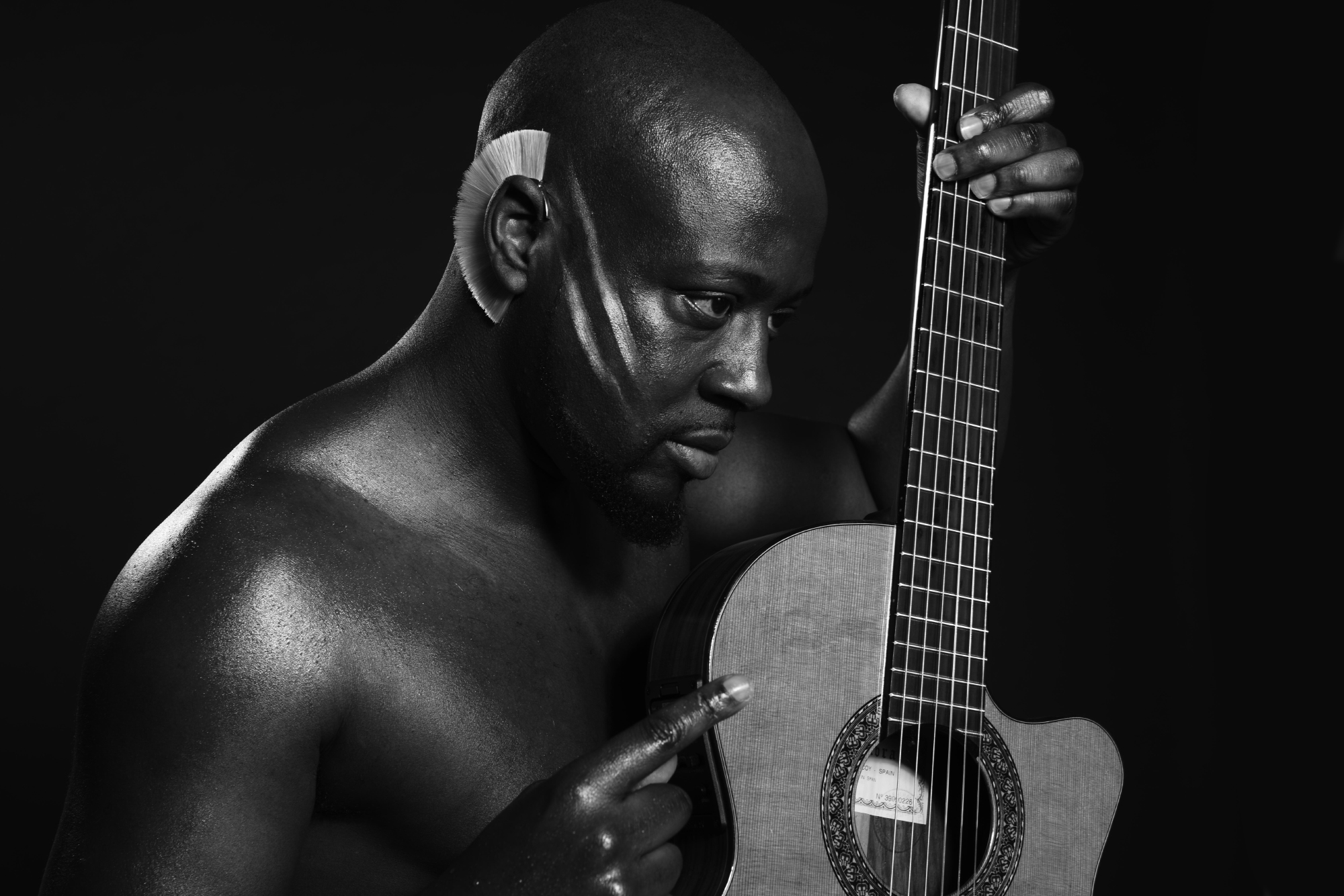
The world famous 'fugee whose hips don't lie: R&B / Hip-Hop veteran Wyclef Jean makes his dramatic comeback in style. He returns with a fully modernised sound featuring stripped back instrumentals, thumping bass and quickly snapping snares alongside his familiar soulful, rasping vocals. If you know what you're looking for, it's also easy to pick out some of those early 2000s throwback beats interspersed throughout as well, on tracks like Rear View and Party Started. His ability to incorporate his classy
guitar skills, always a unique feature of his music, is maintained here in songs like Hendrix and The Ring. A bit more of a variety of beats would be nice, with the album dwelling a bit too much on a Caribbean pop sound and not enough on his intricate lyrics or natural Hip-Hop flow but a triumphant return nonetheless. Watch him perform the maddest freestyle of 2017 on Sway In The Morning here. 3.5/5


Vant - Dumb Blood
For fans of: Cage The Elephant, Circa Waves, Catfish & The Bottlemen

One of the brightest up and coming bands in Indie music, 2017 is going to be a big year for Vant and what a way to kick it off. To summarise the band in three words, they're loud, they're angry and they're political, the latter, arguably their most exciting factor. Indie bands on the whole don't really dabble in politics nor social commentary, so to cover both in a debut record is remarkable. The London-based four piece comment on gun violence, atheism and global warming across thirteen tracks (all but one of which are under four minutes) in an album which offers us a feast of different styles.

There are grungy bass-lines and vocals intermingled with punchy garage rock power chords and bluesy guitar solos, all of which carrying the brash attitude of Punk. There are loud songs and there are even louder songs, not a lower-case letter in sight, as if to emphasise the latter. That being said, they demonstrate a fantastic range, Mattie Vant's raw, powerful and sometimes even delicate voice adapting seemlessly to such a broad array of styles. They offer something for rock fans of any persuasion. 4.5/5

Hanni El Khatib - Savage Times
For fans of: The Black Keys, Kings Of Leon

From the long hair and baggy tshirts grungy side of rock & roll to the raunchier, whiskey and hard drugs side, Hanni El Khatib brings us a collection of songs encompassing around two years of work. Khatib's voice is gravelly, passionate and has that echoey quality as if being recorded through a walkie talkie, a technique used by indie bands from The Killers to The Black Keys. Instrumentally, it's a mixed bag, sometimes dominated by heavy basslines and soaring solos, at others by the delicate, high-pitched 70s funk riffs and others still by the more arrhythmic percussive guitar sounds more familiar to modern indie fans. Some songs work themselves up into a dizzying frenzy whilst others remain more mellow throughout. The latter are the more successful on the album. I'd recommend Paralysed, Gun Clap Hero and

Black Constellation, the latter featuring by far the filthiest blues guitar solo I've heard in a long time. 3.5/5

Devlin - The Devil In
For fans of: Wretch 32, Kano, Skepta

'I've been away for a while cos shit weren't sweet like Tate & Lyle'. Devlin doesn't beat about the bush when it comes to his return. It's been a lengthy time away as well; his contributions have been noticeably absent from Grime's meteoric rise over the last few years. Very much a well-respected figure and prominent name within UK hip-hop, while other stars have reinvented themselves to ride the Grime wave (like Chip or Wiley) or carve their own alternative path through the scene (like Wretch 32), Devlin's style remains virtually unchanged. With that breakneck flow and razor sharp tongue, there's no danger of any maturing from that 'yout on the block' attitude that has, not only defined 8 years worth of his material but the emerging genre as a whole. Lyrically too, The Devil In is a continuation. Corned Beef City, Blow Your Mind and Bitches are typically acidic and venomous, not the sort of tune you stick on at a family dinner. Yet this has always differentiated him from others meaning 'Grimier' efforts like the Skepta collaboration 50 Grand feel somewhat forced. 3.5/5


The Menzingers - After The Party
For fans of: The Gaslight Anthem, Moose Blood, The Wonder Years

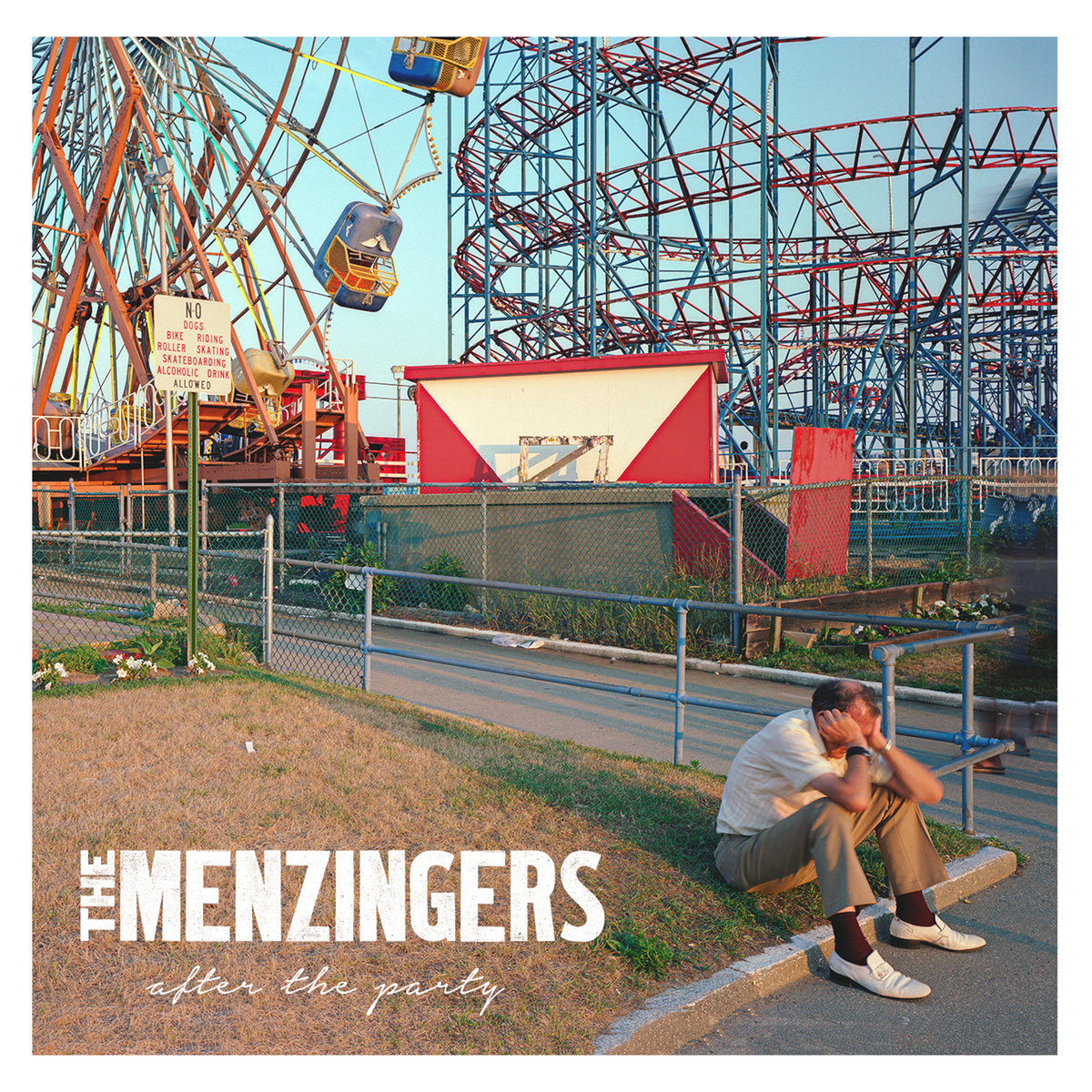
The Menzingers forge that beautiful little bridge between pop-punk and indie rock which, when done right, makes me very excited indeed. It gives you the best of both worlds: punchy guitar, catchy hooks and easy-on-the-ear harmonies balanced with well-crafted lyrics and more complexly structured songs. After The Party offers a combination of heartwarming love ballads (Midwestern States, Lookers), fond reminiscence of a decade as rock stars (Tellin' Lies, House On Fire) and your standard issue pop punk track about the little scamp running away from a girl's enraged boyfriend (Charlie's Army). The whole record carries with it a jovial air of unburdened youth despite most of the band members being in their thirties, yet not at a single point does this feel forced or tired. 4.5/5